A Day Without Immigrants: A Story
My mom was born ~500 km from the newly formed and quickly contested India-Pakistan border, 6 months after post-WWII partition, the 2nd child to a mom (my grandmother) named Kamala, who had an arranged married at age 14. My mom was one of 8 (though one died young), they all slept in one floor, in a mixed religion (Jain, Muslim, Hindu) neighborhood that faced sectarian violence, and in the early years, an apartment without electricity or running water. The family ran a small grocery to make a living, one that still exists.
Everyone, regardless of gender, had free, public education - always a cornerstone to getting out of poverty. However, unlike her older sister, my mom was told she couldn’t go to medical school - as 2nd oldest she was expected to care for the younger siblings. She stood her ground and went anyway (in case you wonder where my own stubbornness comes from), managed to pay it off by a program that paid for school in return for working in poor, rural hospitals afterwards. She met a man in med school who ended up my dad, from a different religion, from a bigger city, a family of clothing dye manufacturers, and despite family concern about the mixed-religion marriage, married him, and then he left for America (where he had to immediately register for the Vietnam war draft lottery, and first lived with his brother working in chemical waste disposal in NJ). My mom followed a year later as she first had to complete that rural hospital program.
America had only recently liberalized immigration quotas from Asia and elsewhere in the late 1960s, which opened a door from my parents to go to a country that wished itself to be more tolerant of religious liberty and facing a wave of women who fought for the right to be able to enter the workforce in all careers. India was going through tough economic times and political turmoil (“The Emergency”) then, so the decision to immigrate to a country also in need of new doctors had many things going for it. Still, it wasn’t easy in the US in small city in New Jersey, the the ancestral home of the Lenape, and home of generations of immigrants and migrants, Italians, Irish, Scots-Irish, Germans, Greeks, Puerto Ricans, Koreans, Dominicans, eastern European Jews, and African-Americans, to name a few, where everyone is always a little wary but eventually incorporating of the newcomers. The small-at-the-time Asian Indian immigrant community (no longer the case!) banded together, but medical residency while pregnant was tough, while my dad’s long hours took a toll. I remember being refused service at a fast food restaurant in the US south and being called a “dothead” in high school. Eventually, my mom decided her path was first to raise kids (me and my younger sister) and then manage my dad’s practice as an office manager.
But they made a life of it, doing very well by the time I was in middle school, though not without the usual turmoil that hides behind the veneer of bliss that makes suburban life. I spent my time learning how computers work and programming video games with my crew of friends who looked straight out of Stranger Things, playing metal songs on electric guitar, and finding a love of outdoors and environment of the Pine Barrens and barrier island dunes through scouting, reflecting also my parents desire for rapid assimilation of their kids, and as is common for immigrant families, a strong demand to excel at academics. Meanwhile, her siblings back home and their kids managed to ride the tide of the rising global middle class, and turn from grocers to a small investment firm on the 2nd floor of that grocery, to running a regional financial advisory company, moving to bigger houses on the outskirts of town, and some to the US.
It’s all classic stories of the late 20th century, but also so personal. A day without immigrants is not a day in this country at all. And for me, as a first-generation American, it’s a strong reminder that I keep in the back of mind always that I am only one generation removed from a very different world, with a setting that may have led me on a very different path. And it’s not unlike my wife’s story, two generations removed from being forced out by Nazi confiscation of their businesses and homes, because of centuries of demonization of their religion and culture, and I know, not unlike stories of many of yours too.
We build worlds so that generations can form, seek restitution, seek education, in places new, in places with liberty, and then make those places home, mixed in with their own culture, and by virtue, better. We can’t risk losing that, even if those of us with privilege to do so have to lose a little to fight the ugly and deep scars brought about by the rise of nativism that rears its head so often on our soil, on my soil. I’m proud my high school age daughter is out right now, raising her voice in the history that May Day recalls, on the WI capitol steps with thousands of her peers, choosing to spend her time this way on a day off school, and later will go home to study for her upcoming AP exams including on African-American history, before leaving in a few months to study abroad for a year back in her great-grandparents homeland of Germany, as a half-South Asian Jew. That’s the world I want to support. I hope you do too.
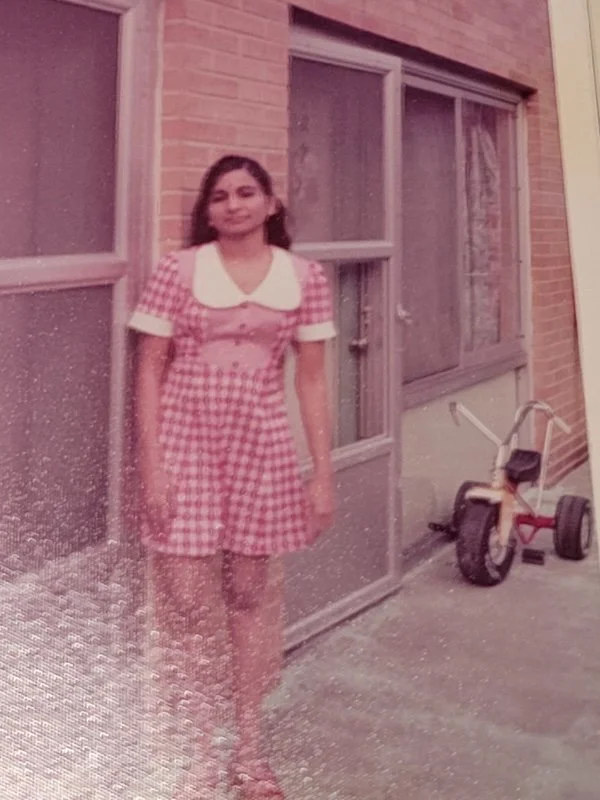
A new immigrant in a new world
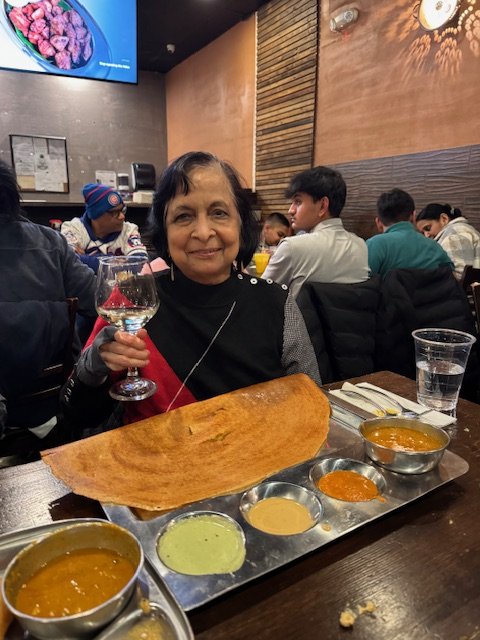
An older immigrant in her world of southern New Jersey